The NC State Turf Diagnostics Lab is currently inundated with samples, phone calls, text messages, emails, smoke signals, and carrier pigeons, all showing symptoms of slime mold. The good news is that this is nothing to worry about. Slime molds are harmless to turfgrasses and will dissipate as soon as conditions dry out. There are no labeled fungicides for use in home lawns, so if you want to get rid of them, you can wash them away with a garden hose or physically knock them off the leaf blades with a rake.
Slime Mold Outbreak (Hint: Don't Panic!)
(Updated: May 28, 2026, 9:16 a.m.)
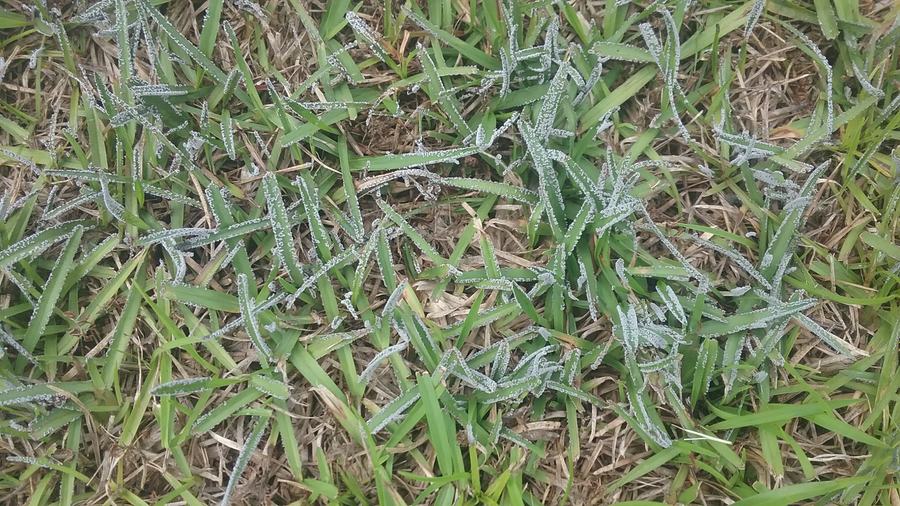
Slime mold on centipedegrass
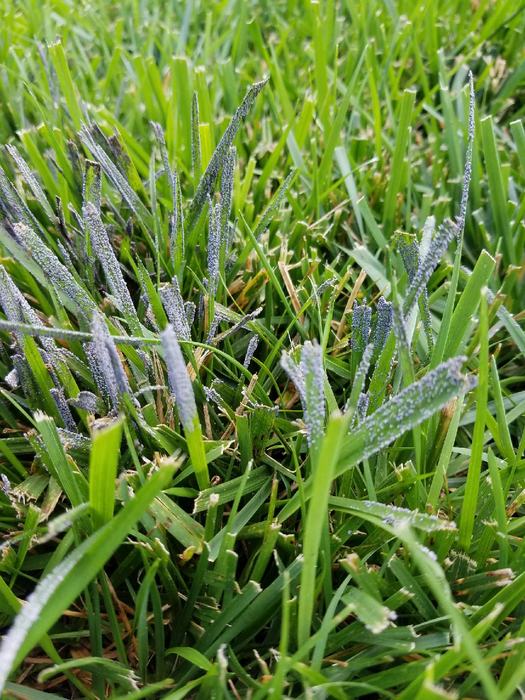
Slime mold on tall fescue.
Slime molds are classified as protists rather than fungi. They do not cause disease in turfgrasses, and their sudden appearance can be quite alarming if you've never seen them before. They are actually very fascinating to observe when they occur because they appear in a variety of colors, such as white, yellow, gray, pink, purple, or brown. These organisms use turfgrass leaf blades as a support structure to elevate their reproductive structures for better dispersal. Slime molds generally will appear year after year in the same general areas and are typically more severe after extended drought periods, which is exactly what most of North Carolina has been experiencing as of late.
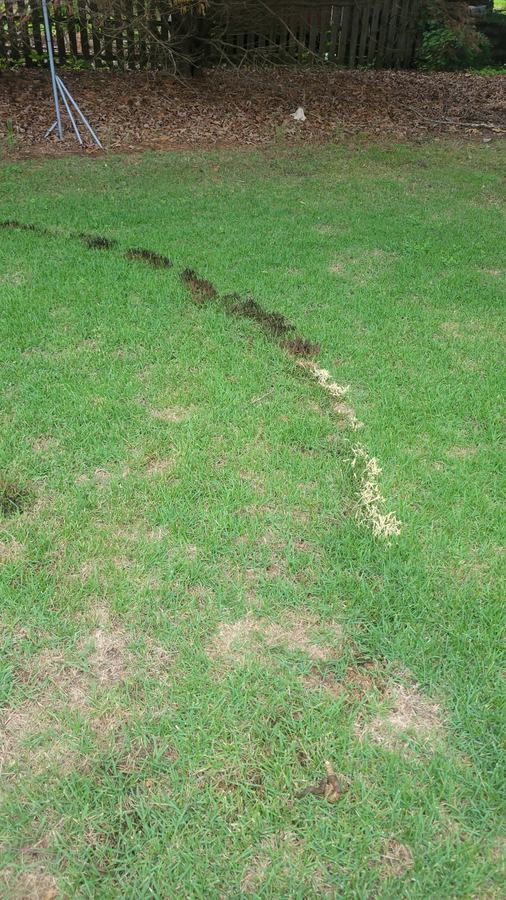
Slime mold on zoysiagrass.
So, instead of being worried about some alien disease killing your lawn, enjoy their colorful displays and take it all in for fun. For extra credit, go look at them up close with a magnifying glass with the kids, your neighbors, heck, even get the mailman involved in one of nature's little oddities!
Click here for more information about slime molds.